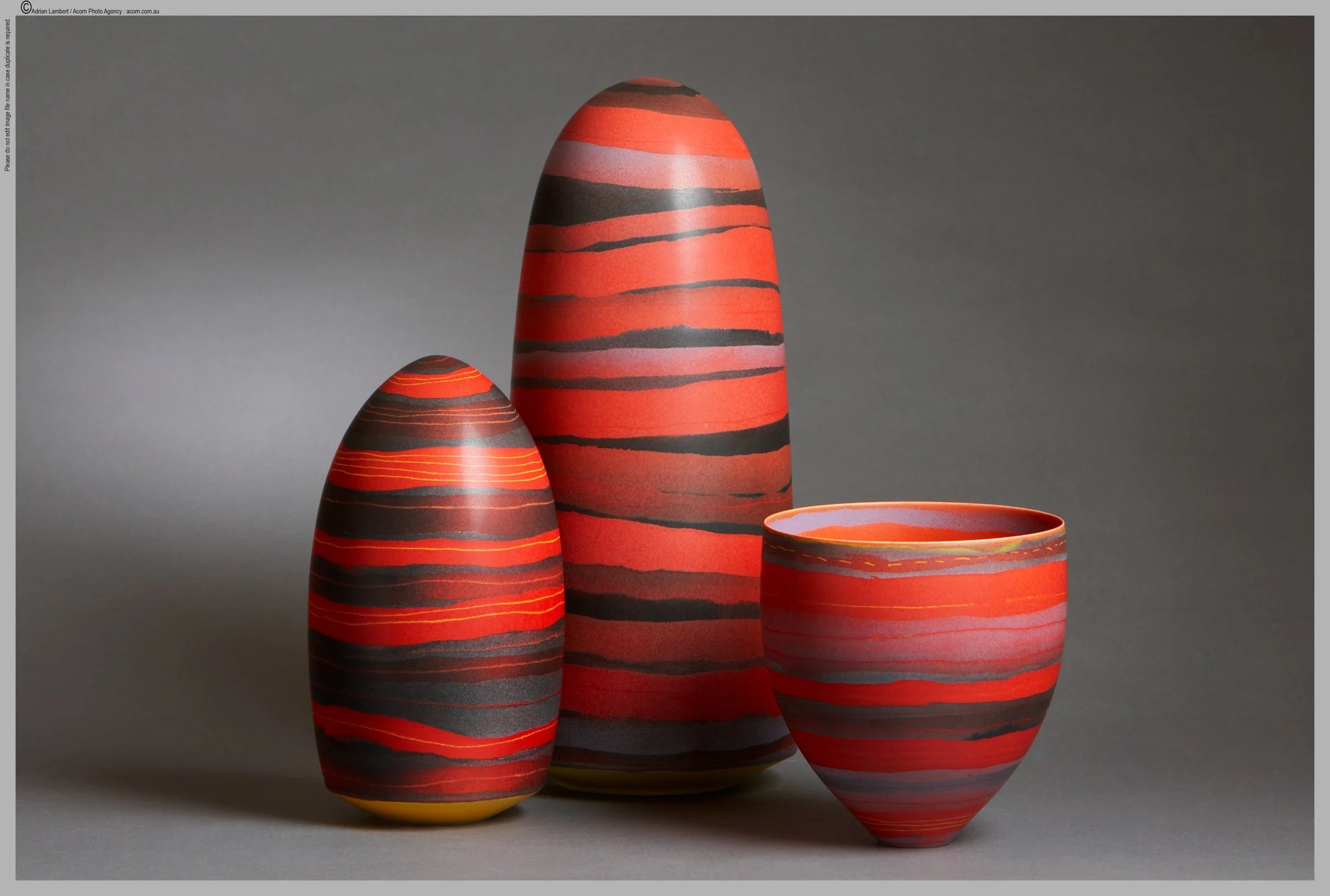
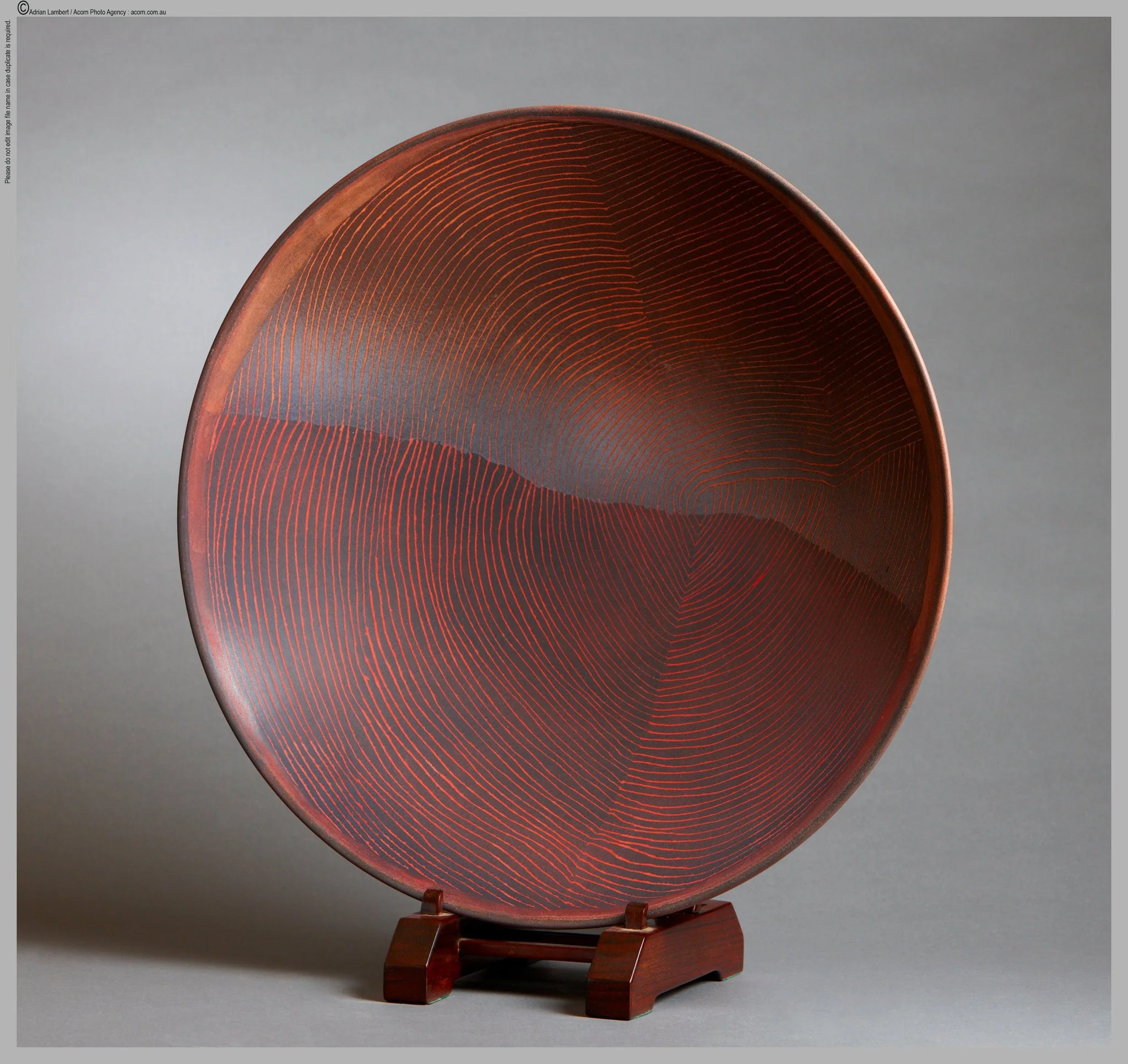
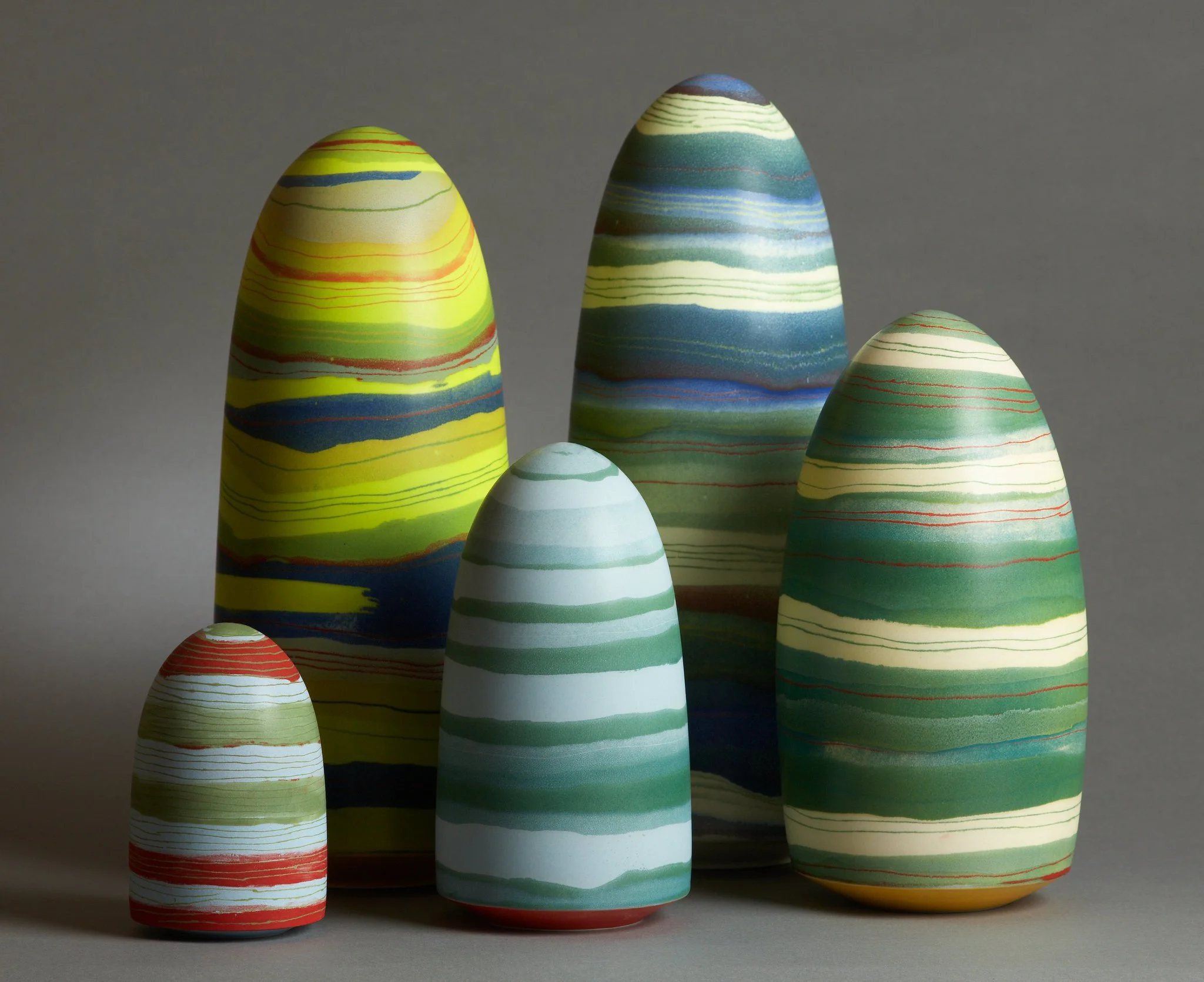
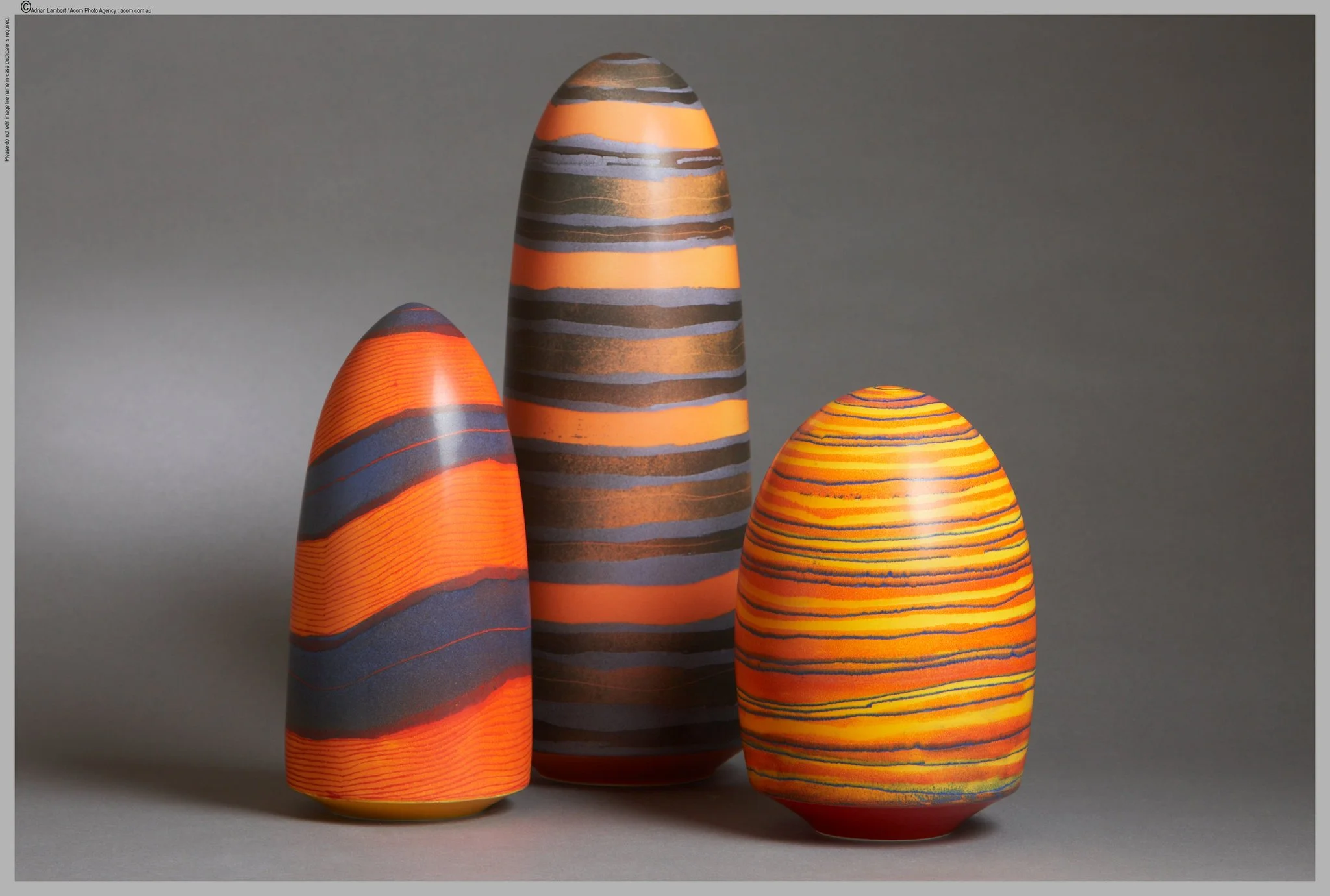
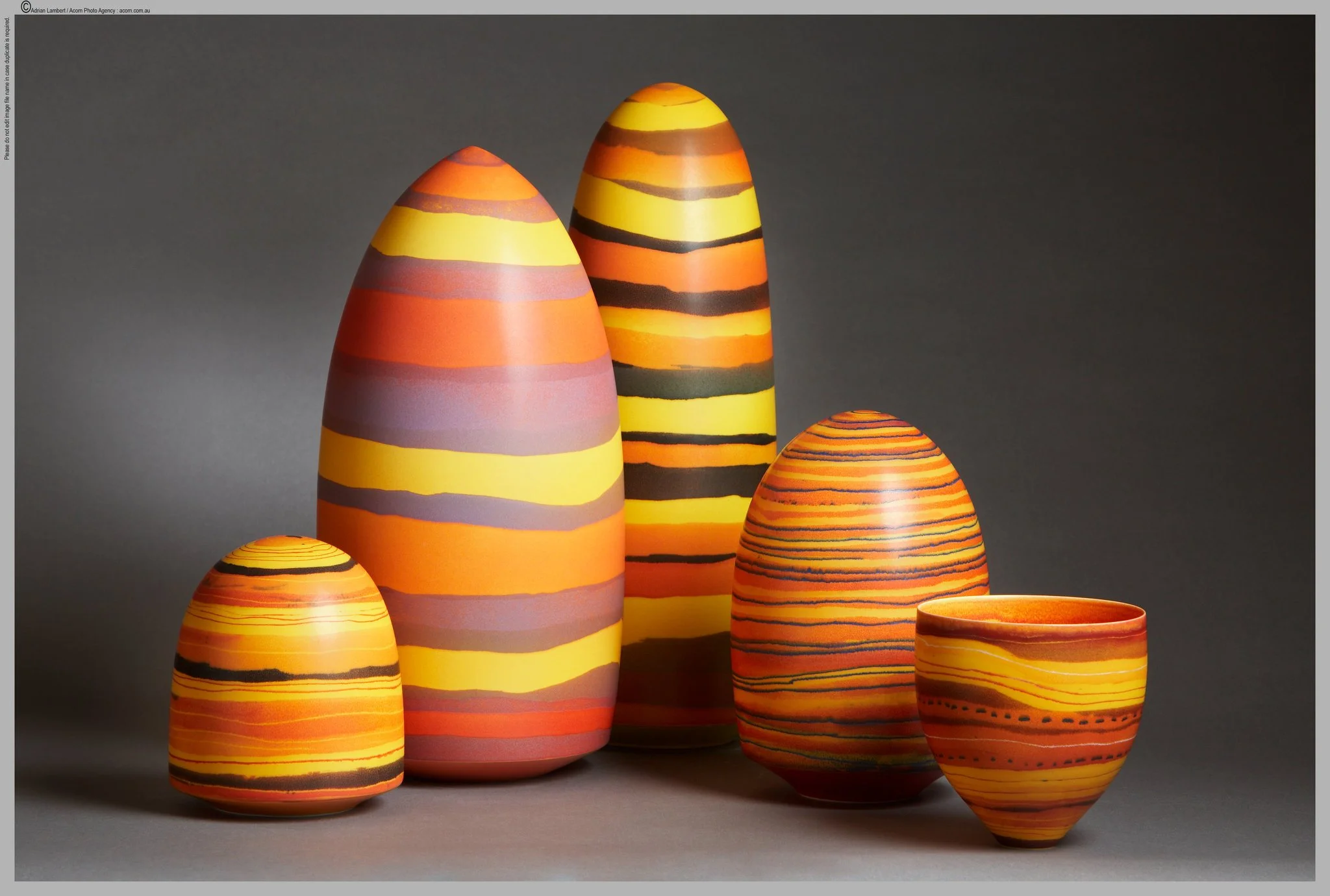
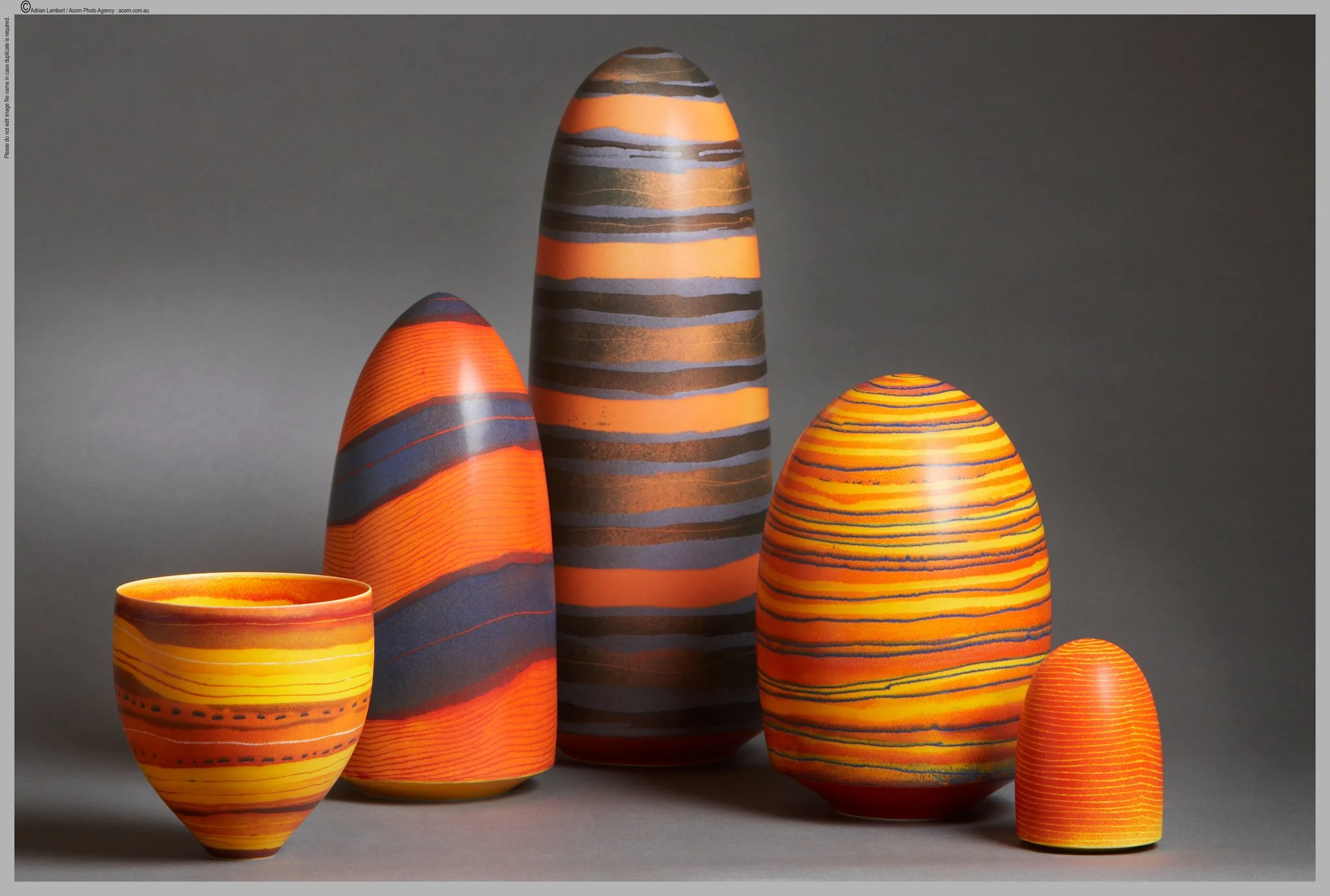
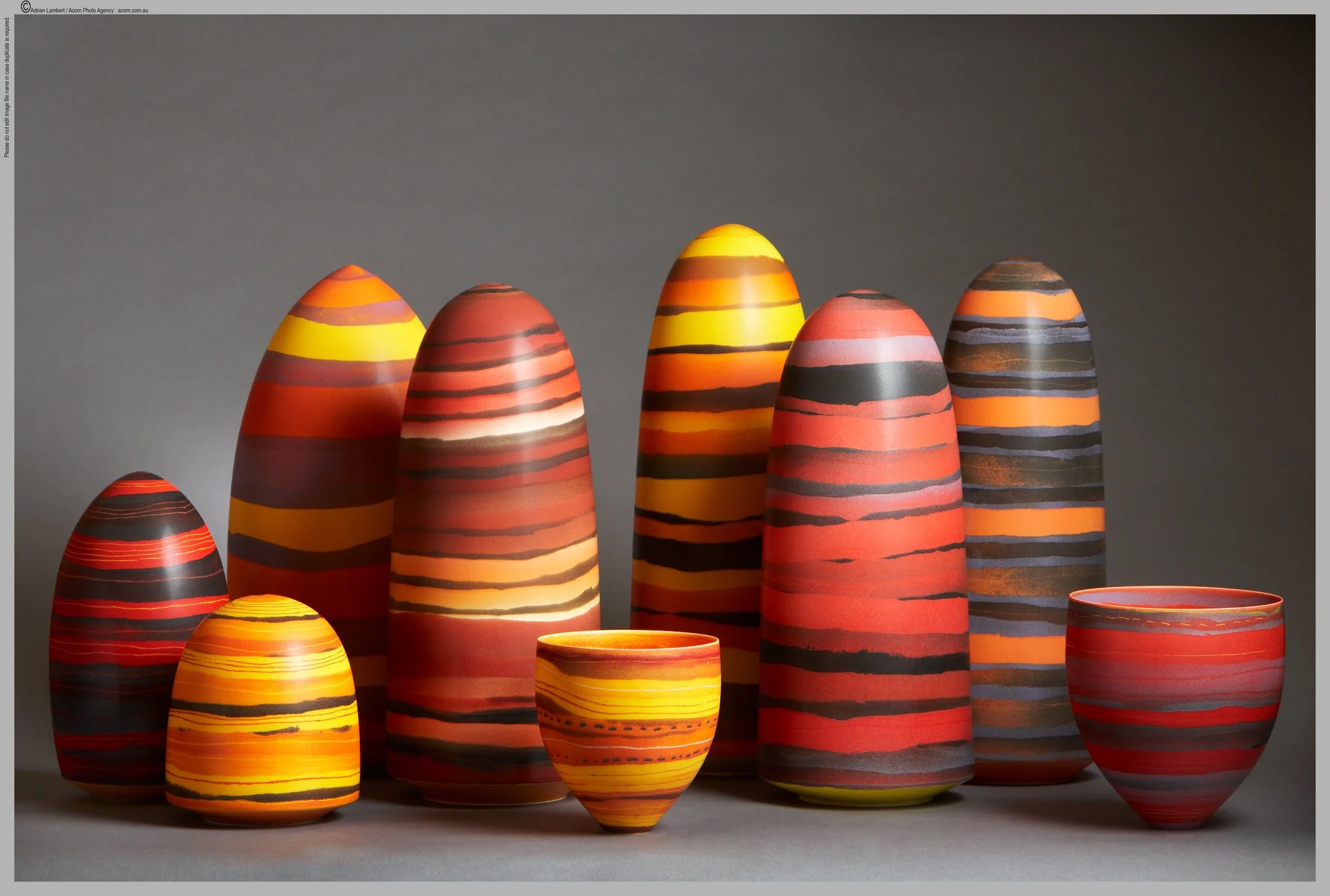
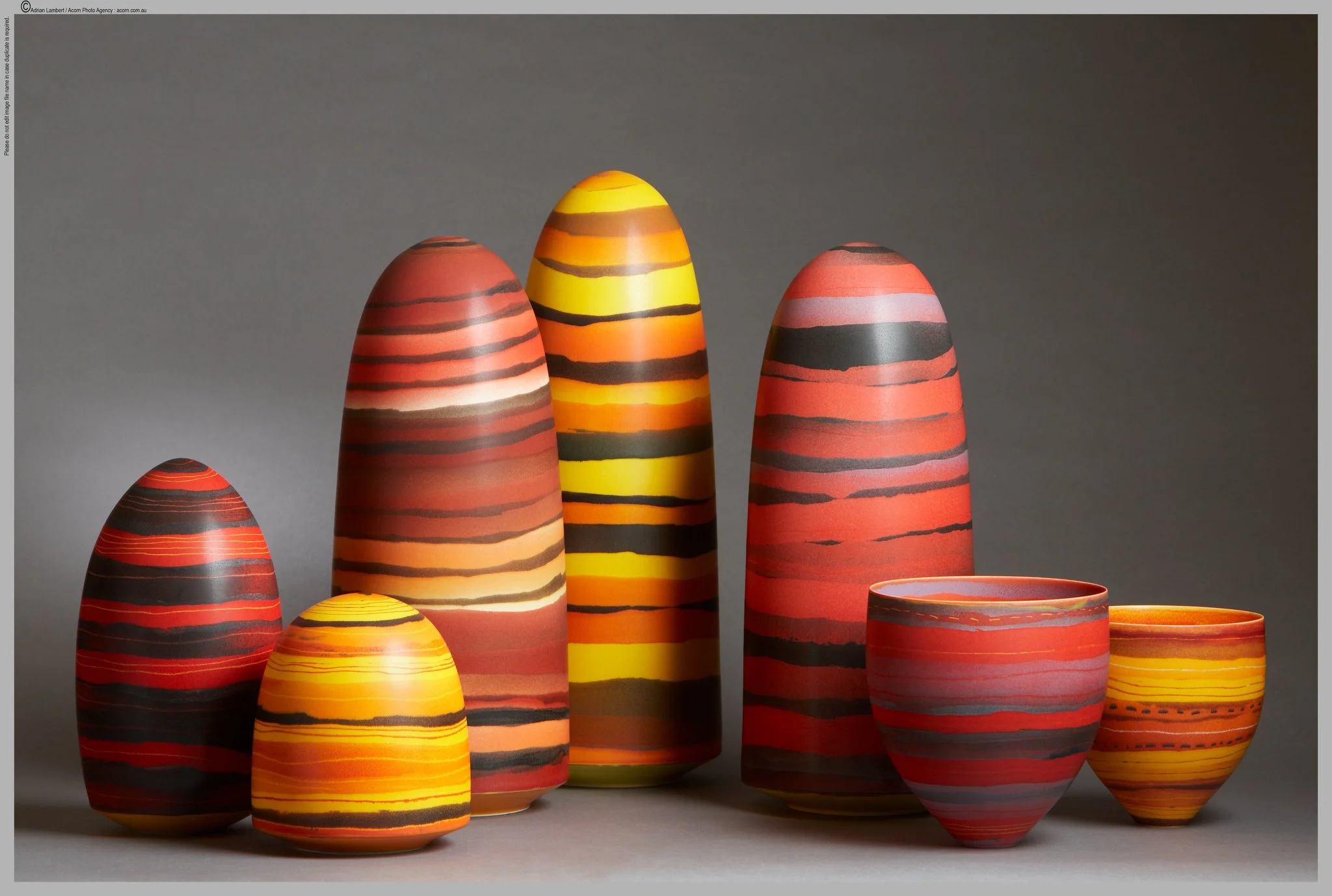
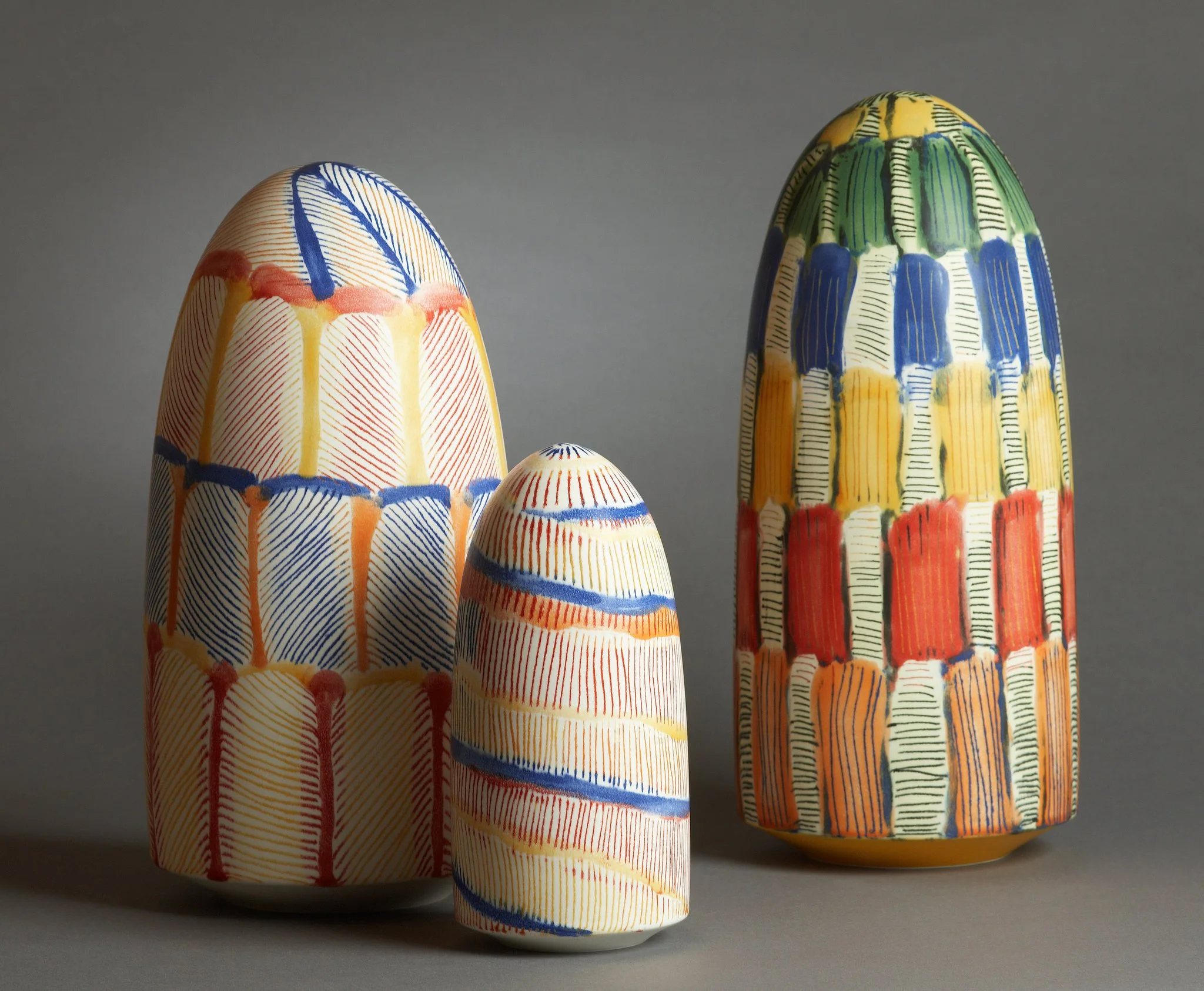
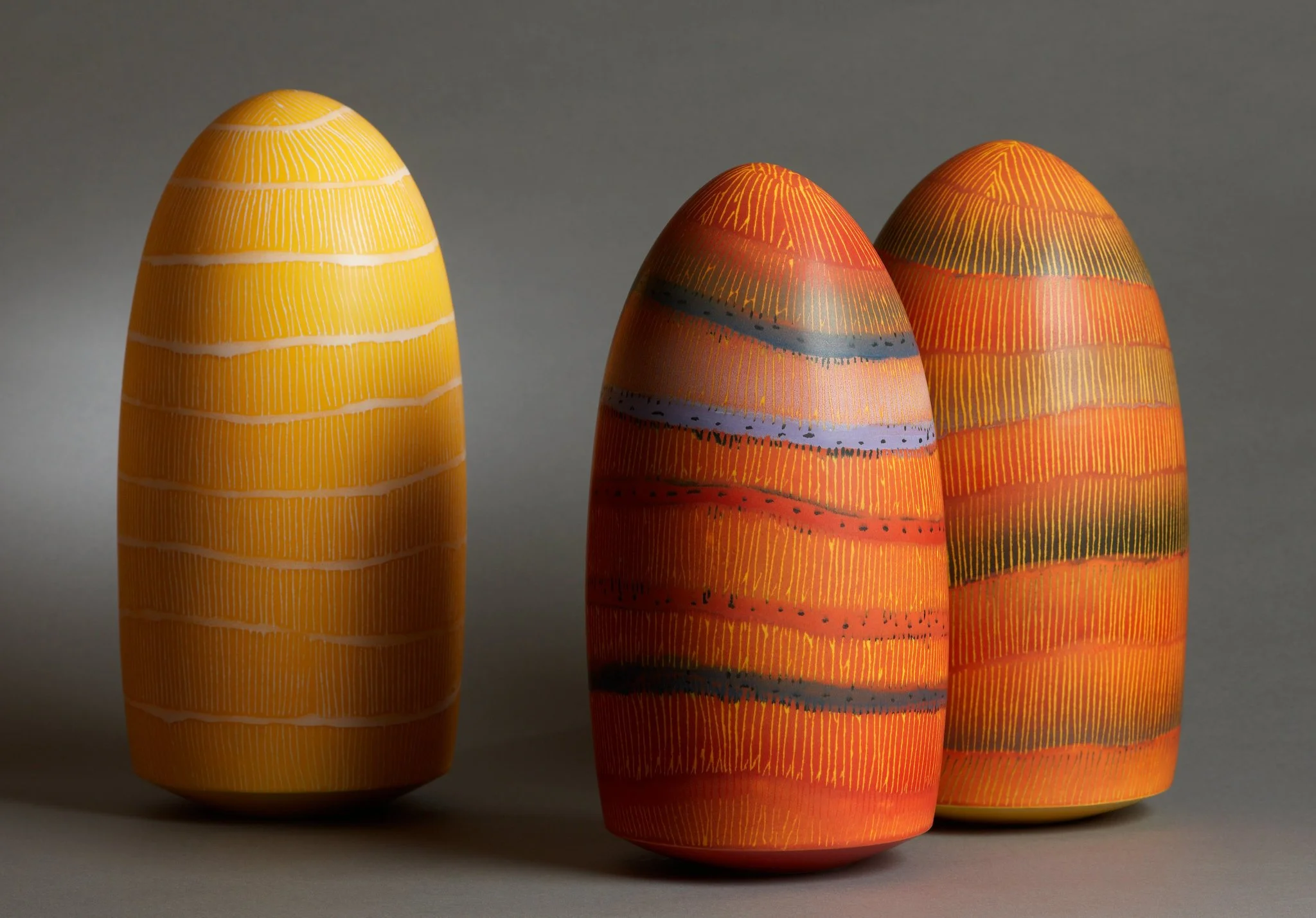
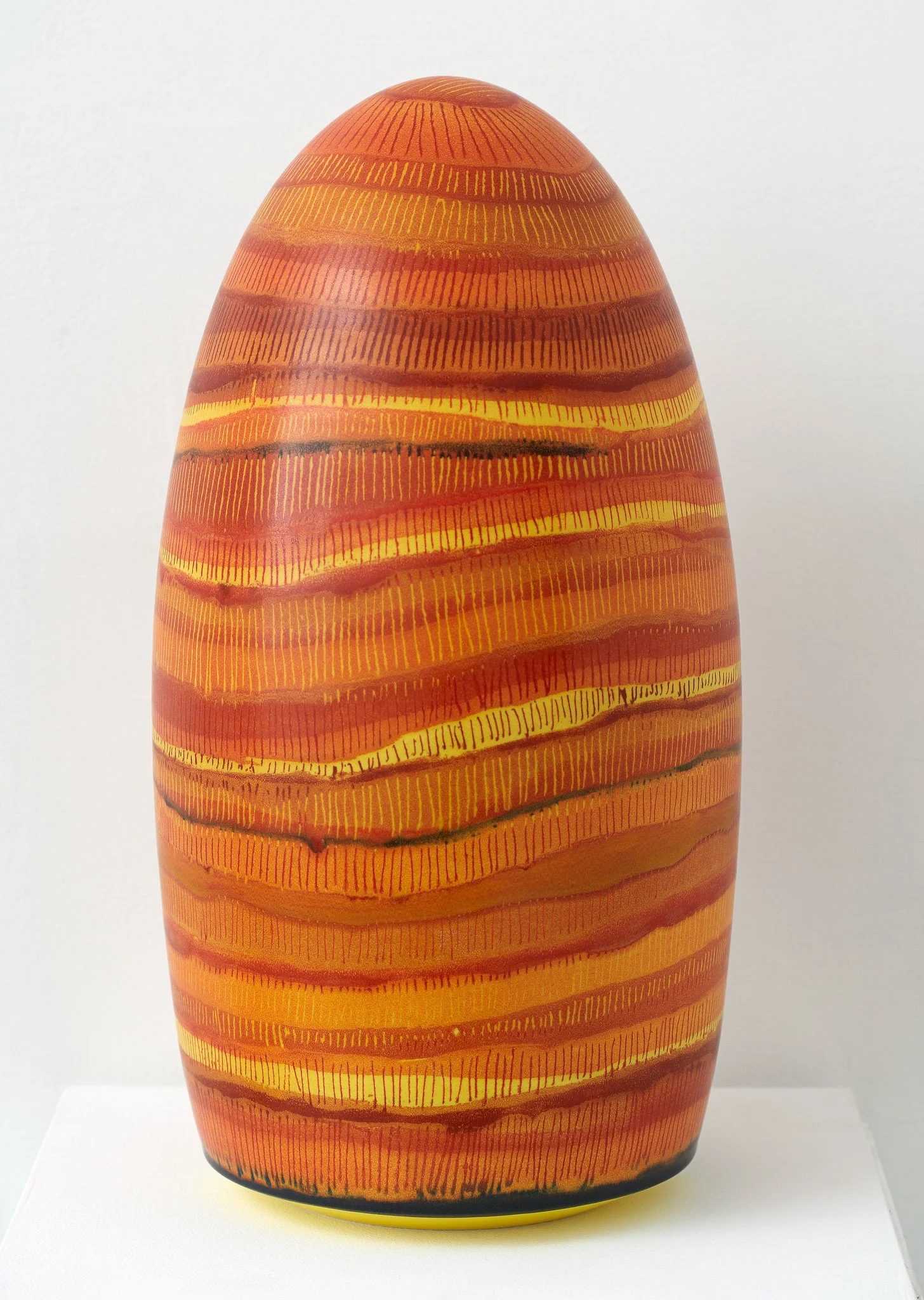
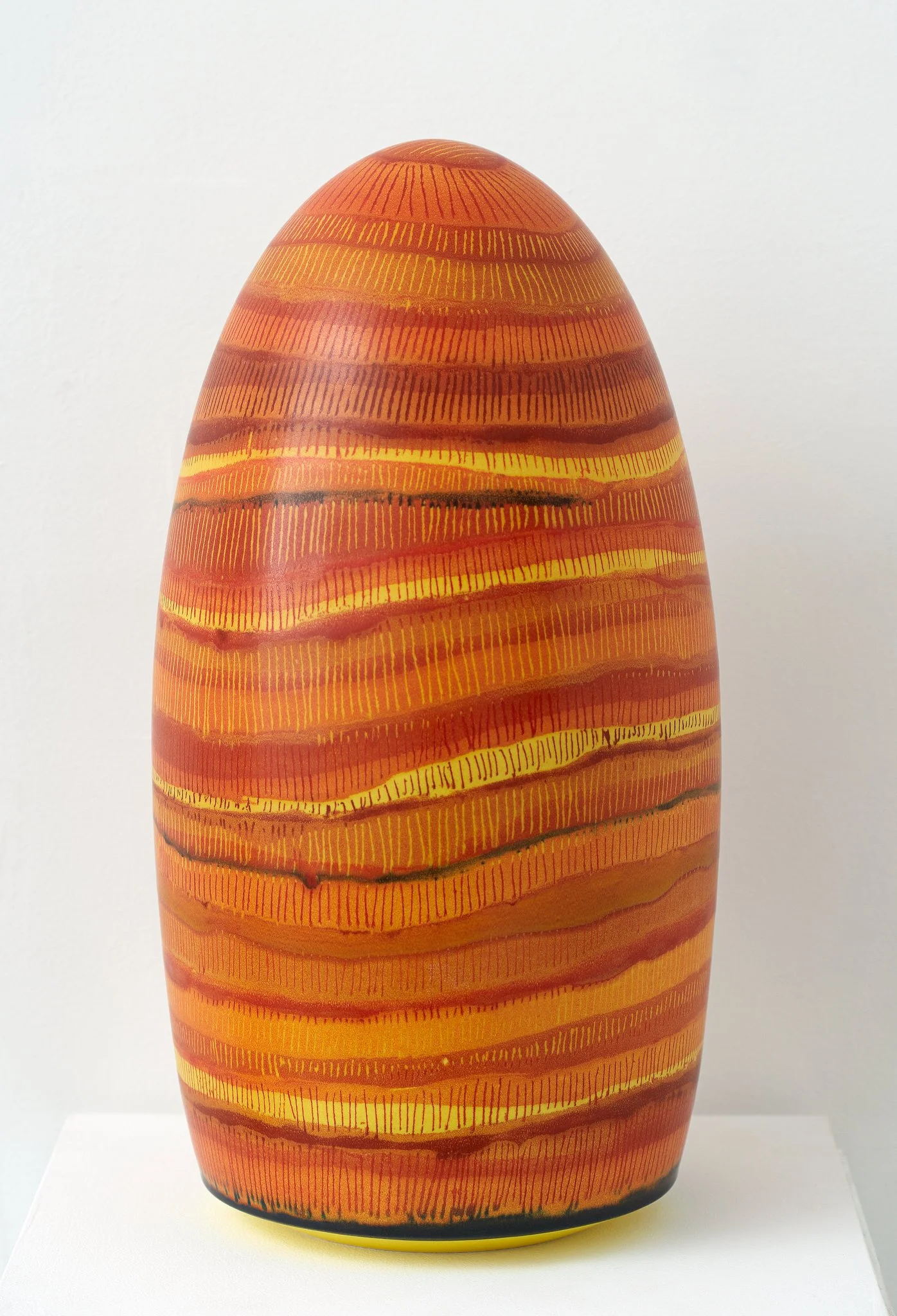
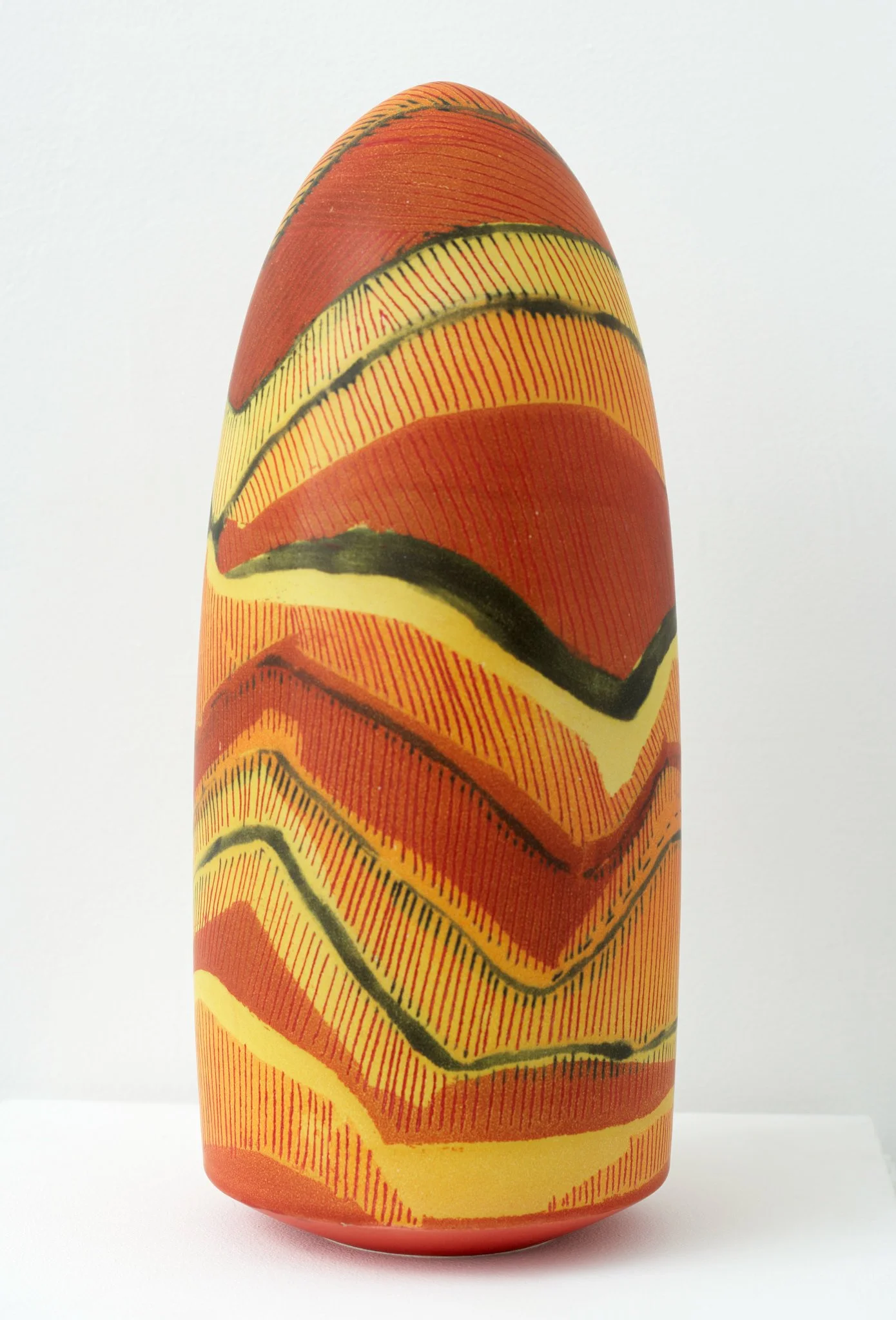
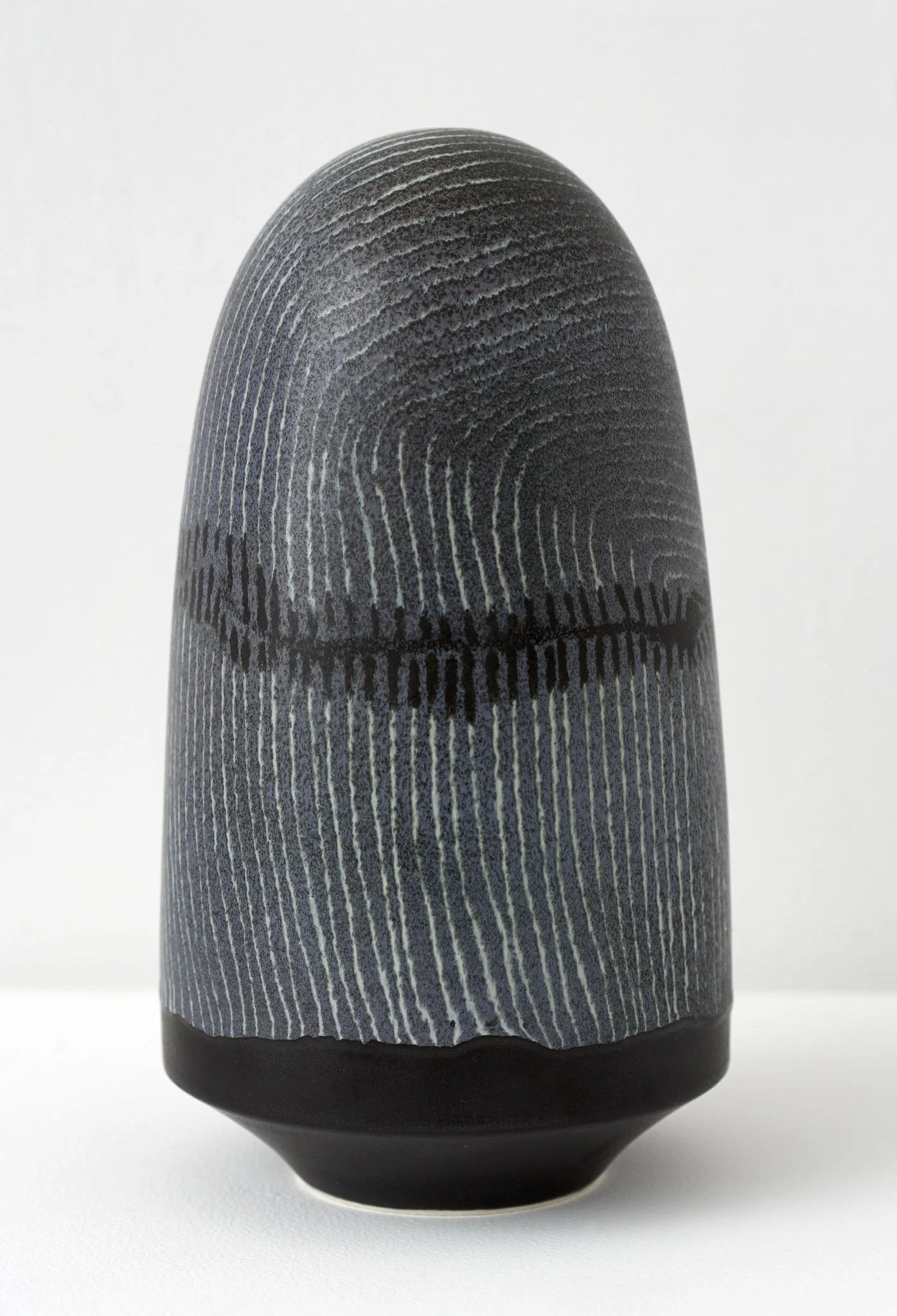
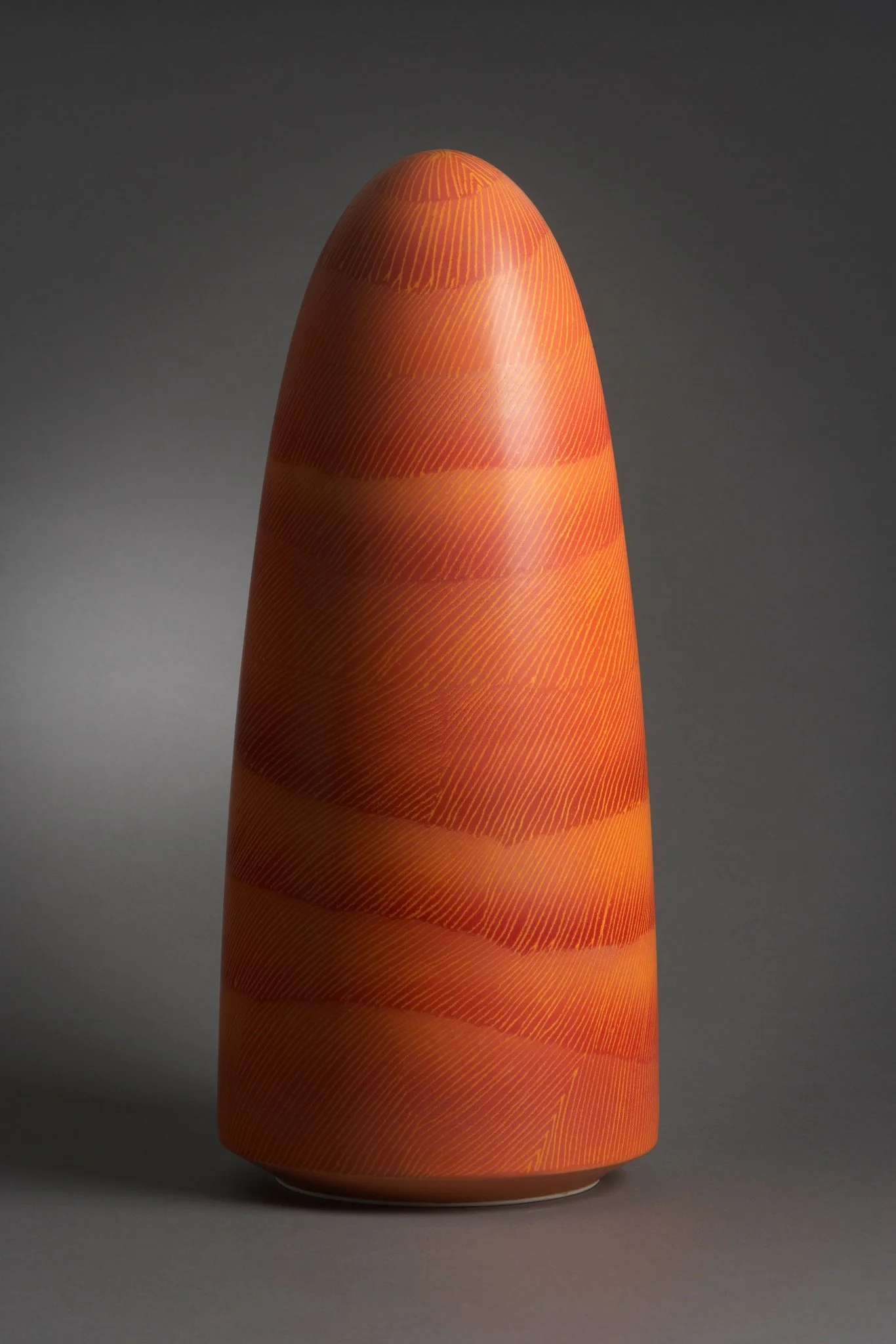
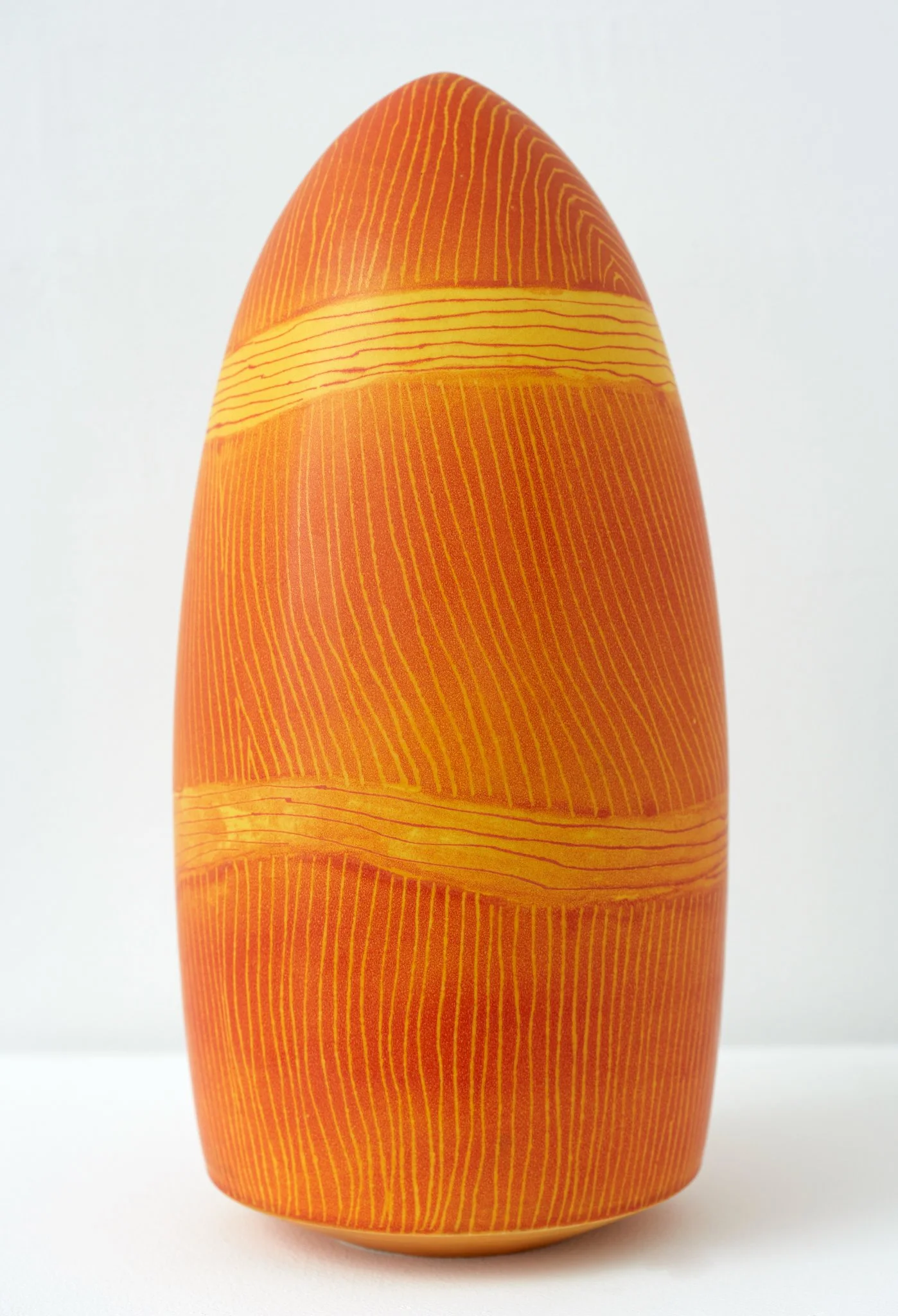
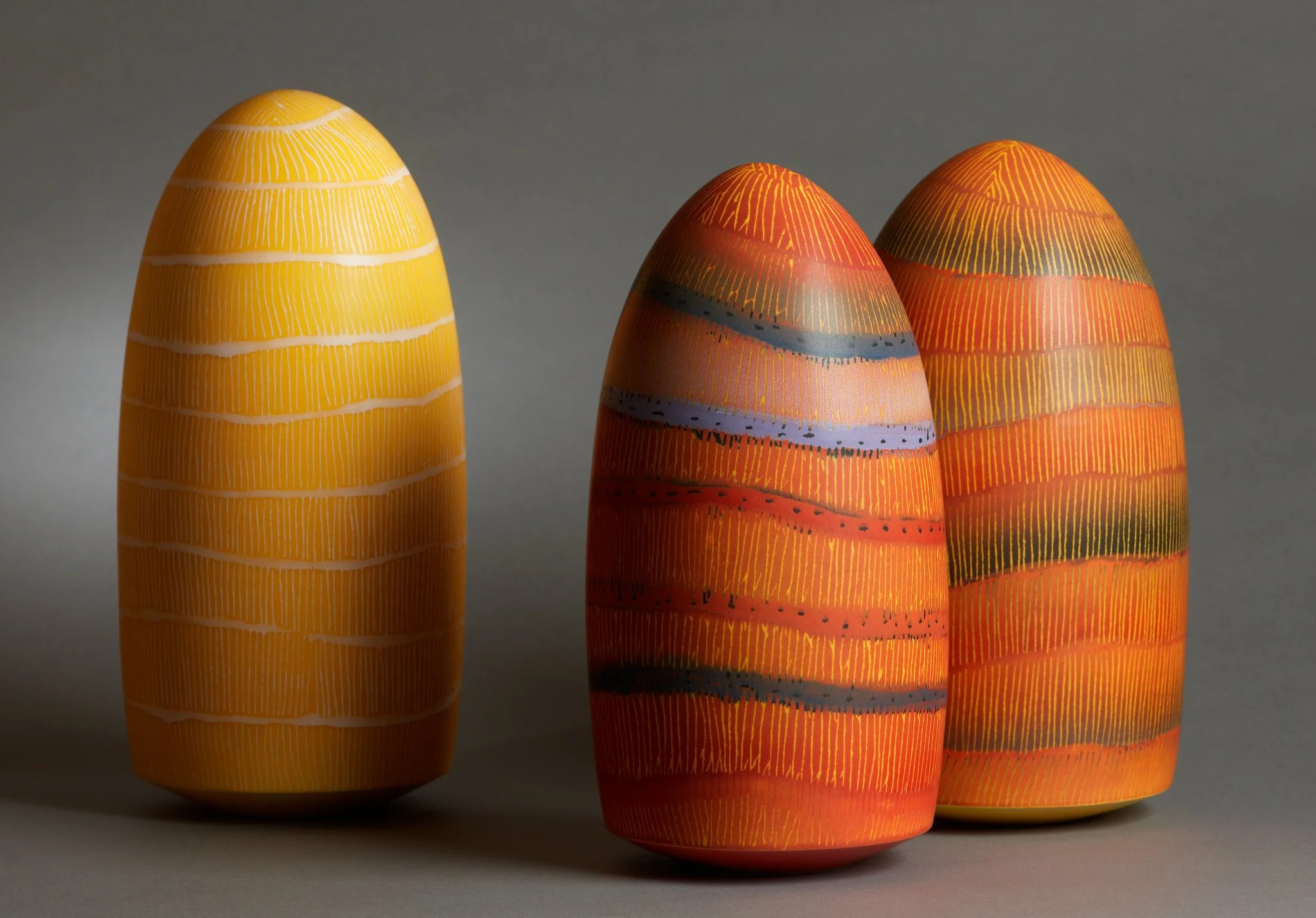
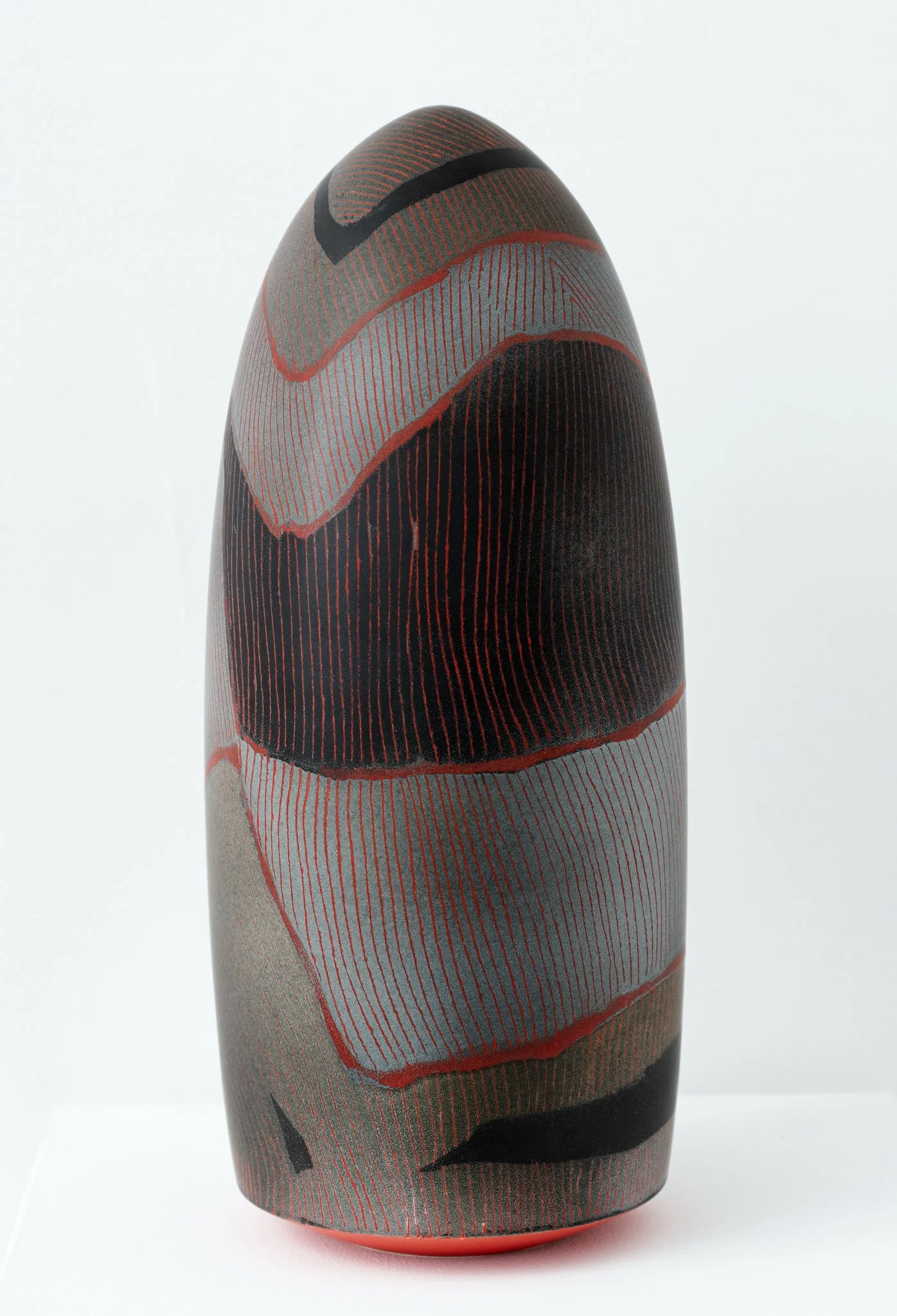
Purnululu is the name given by the Kija people to the sandstone area of the Bungle Bungle Range. Rising as high as 578 metres above sea level, the extraordinary linear striping of the domes is due to the differences in clay content and porosity of the sandstone layers.
Kimberley Series
2019-20
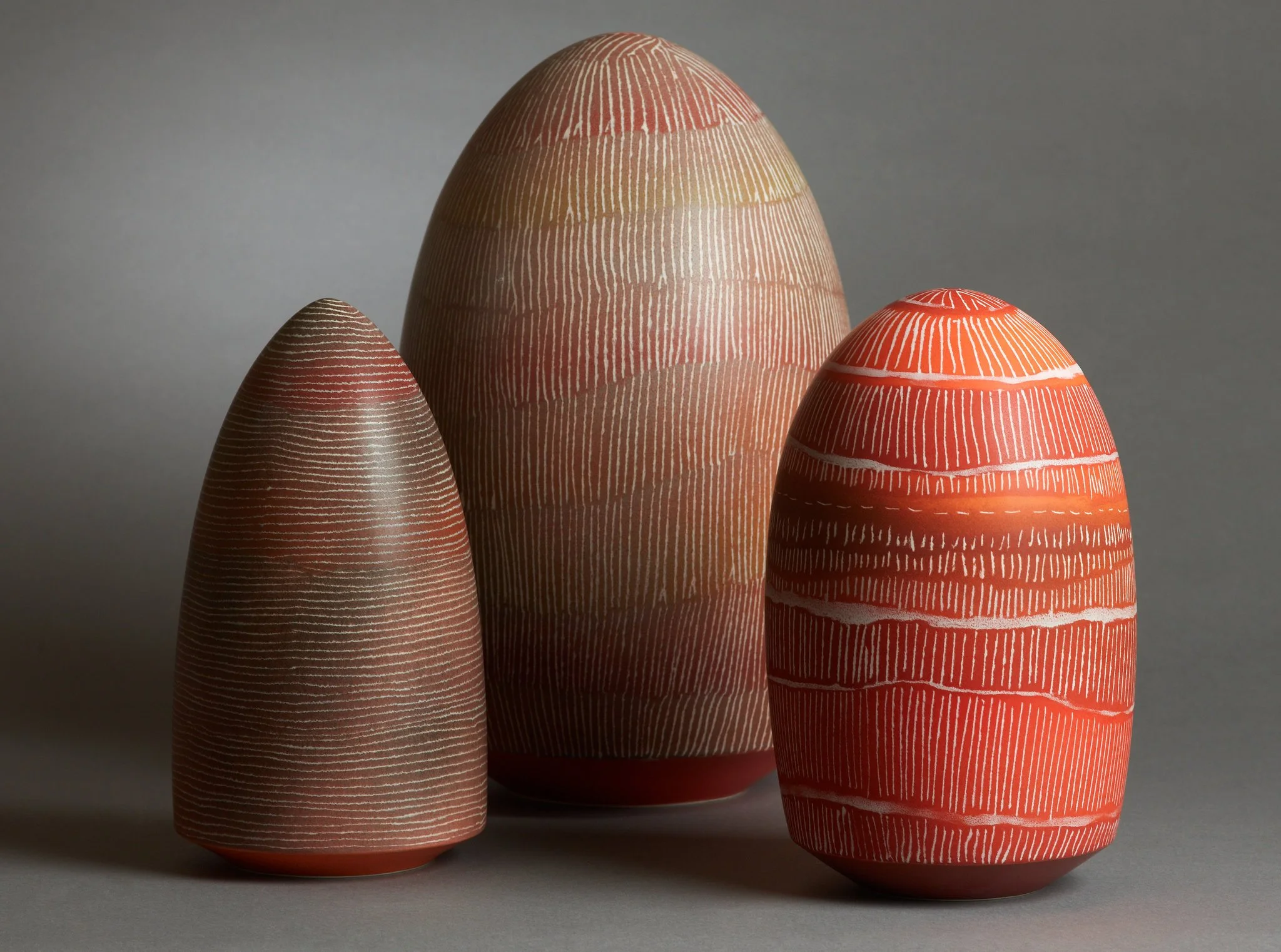
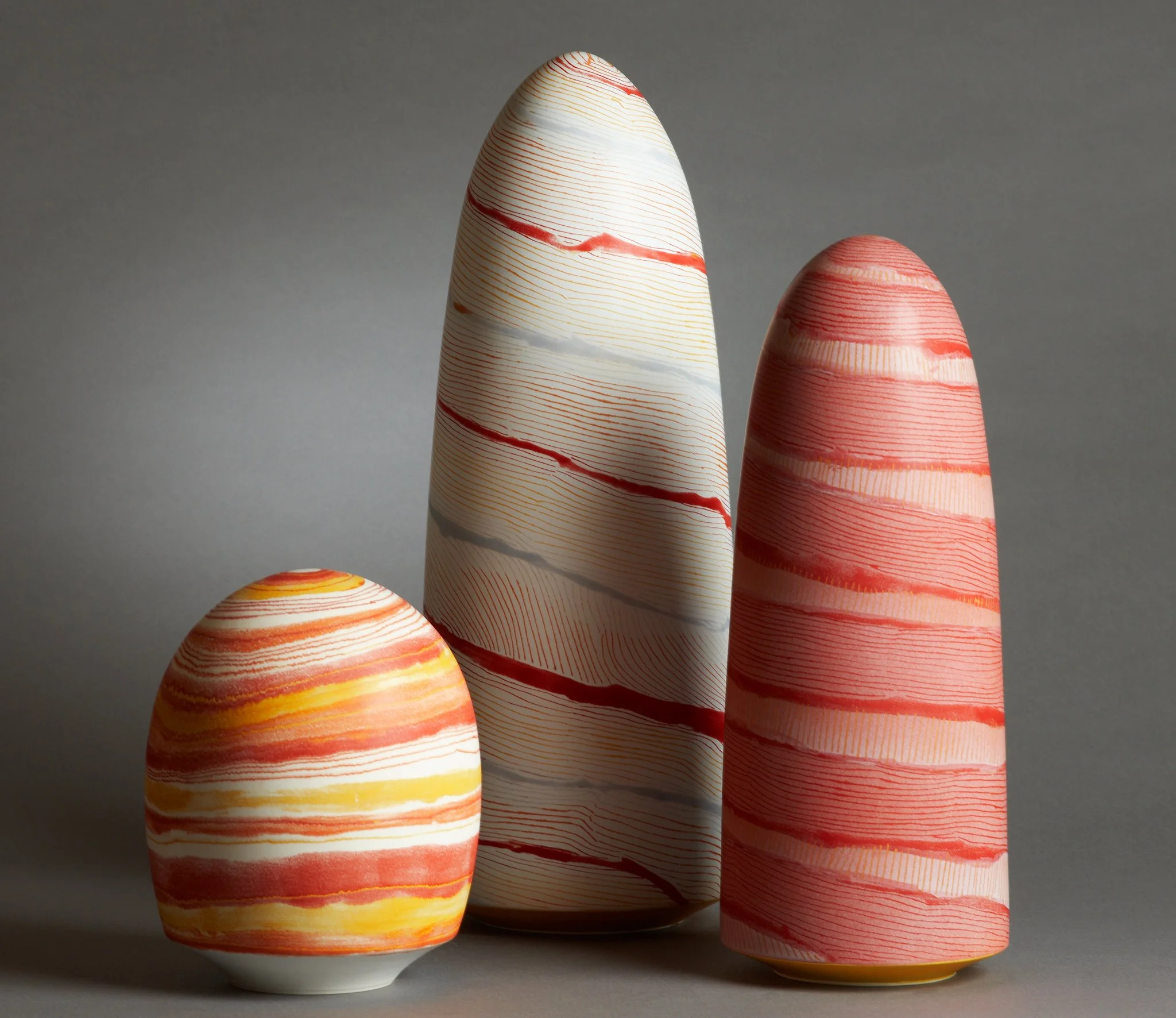
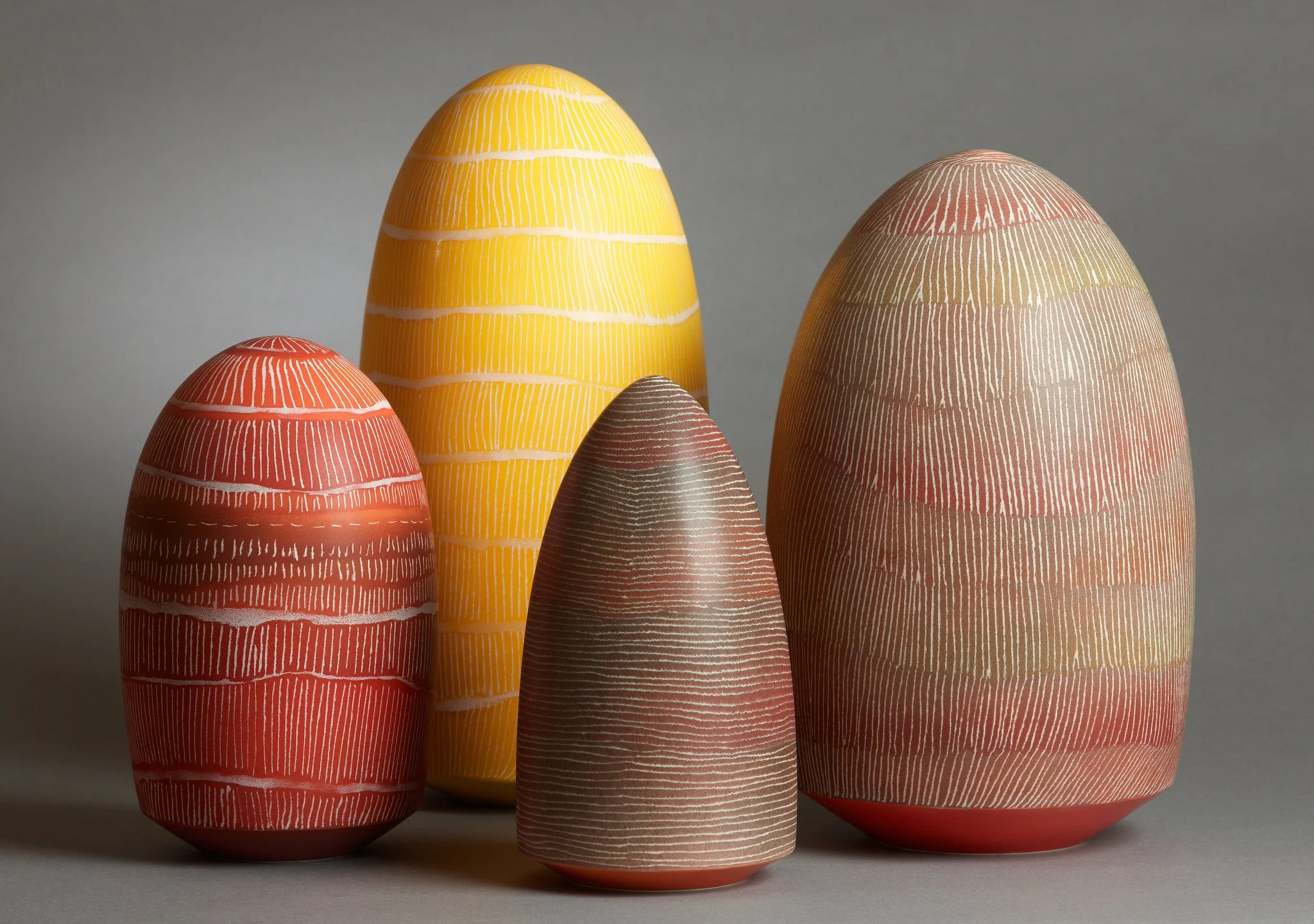
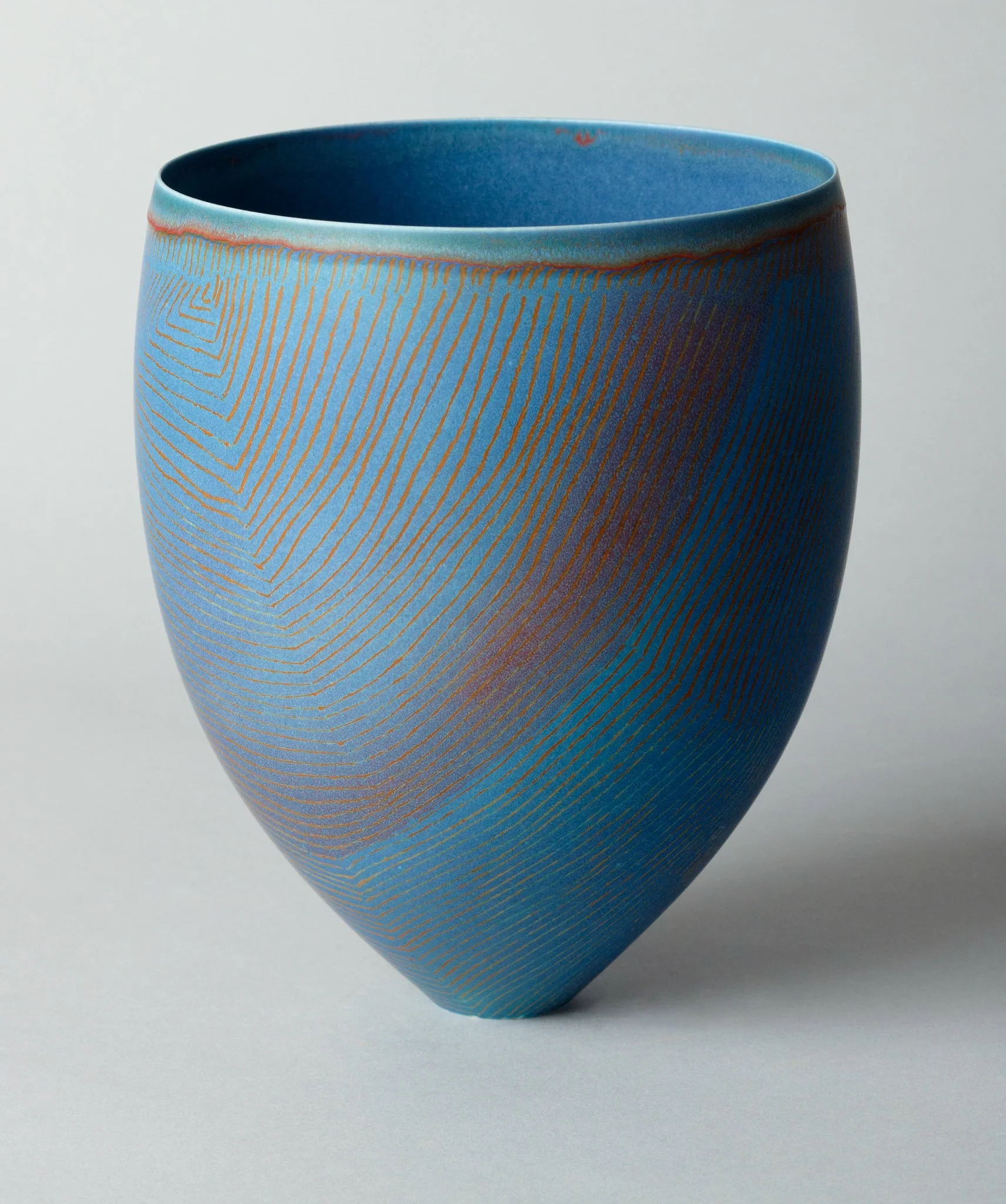
The Kimberley Series is a new group of works based on the artist’s experience of travelling in the northwest region of Western Australia. The northwest has been lodged in Drysdale’s psyche since her first visit while still a teenager in 1958 when she sailed on the MV Kanimbla to visit Millstream Station, a property owned by the family of a school friend. The landscape, its people, the dramatic change of seasons and the remarkable geological structures were imprinted on her brain. A trip back to the region in 1998 ignited those memories and linked them to the mature vision of an artist. Over the following decade, she has explored ways in which this imagery might inform her work. However, the confluence of ideas and the opportunity to work on a major new project resulted in a new group of closed forms that investigates the Kimberley landscape anew.
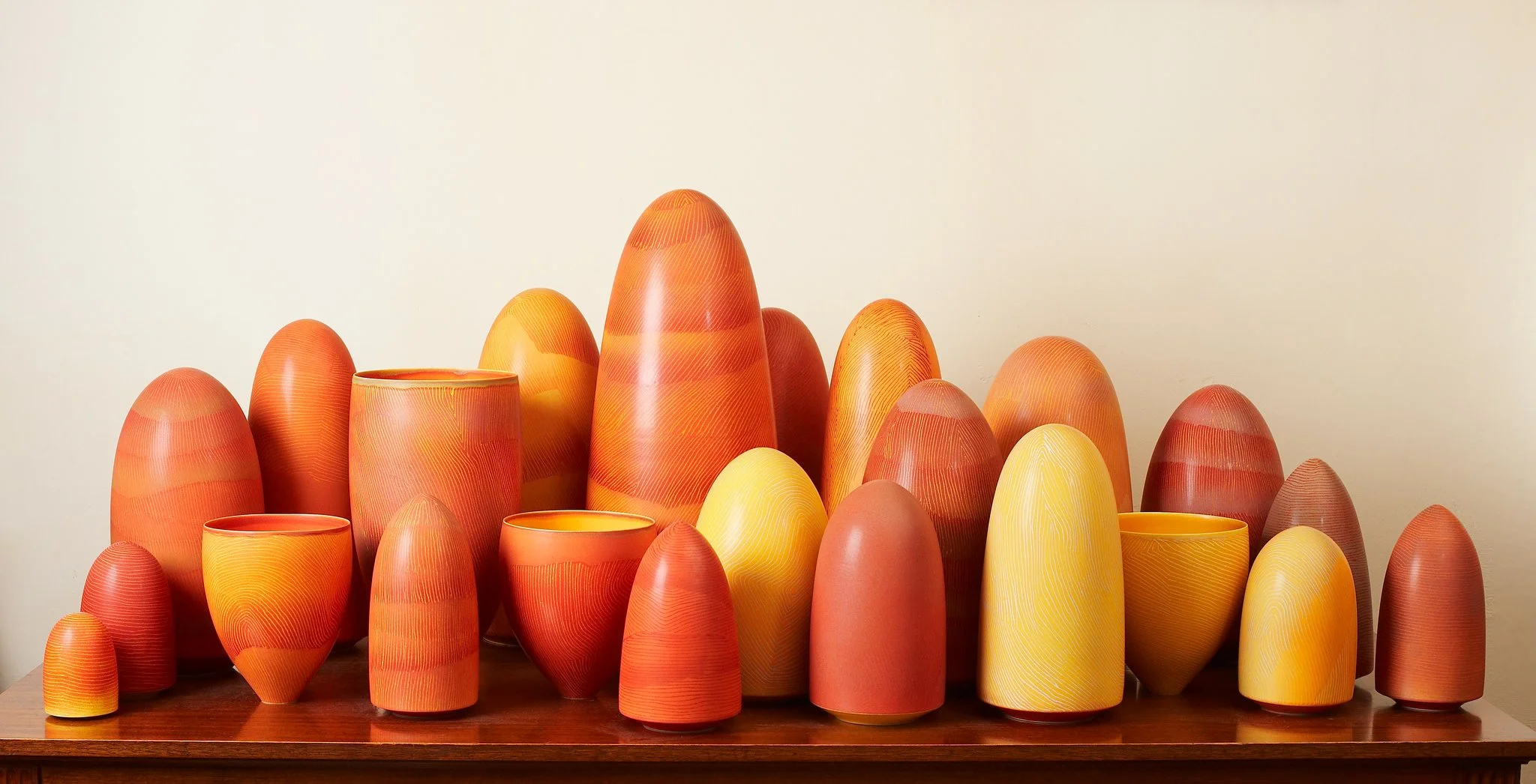
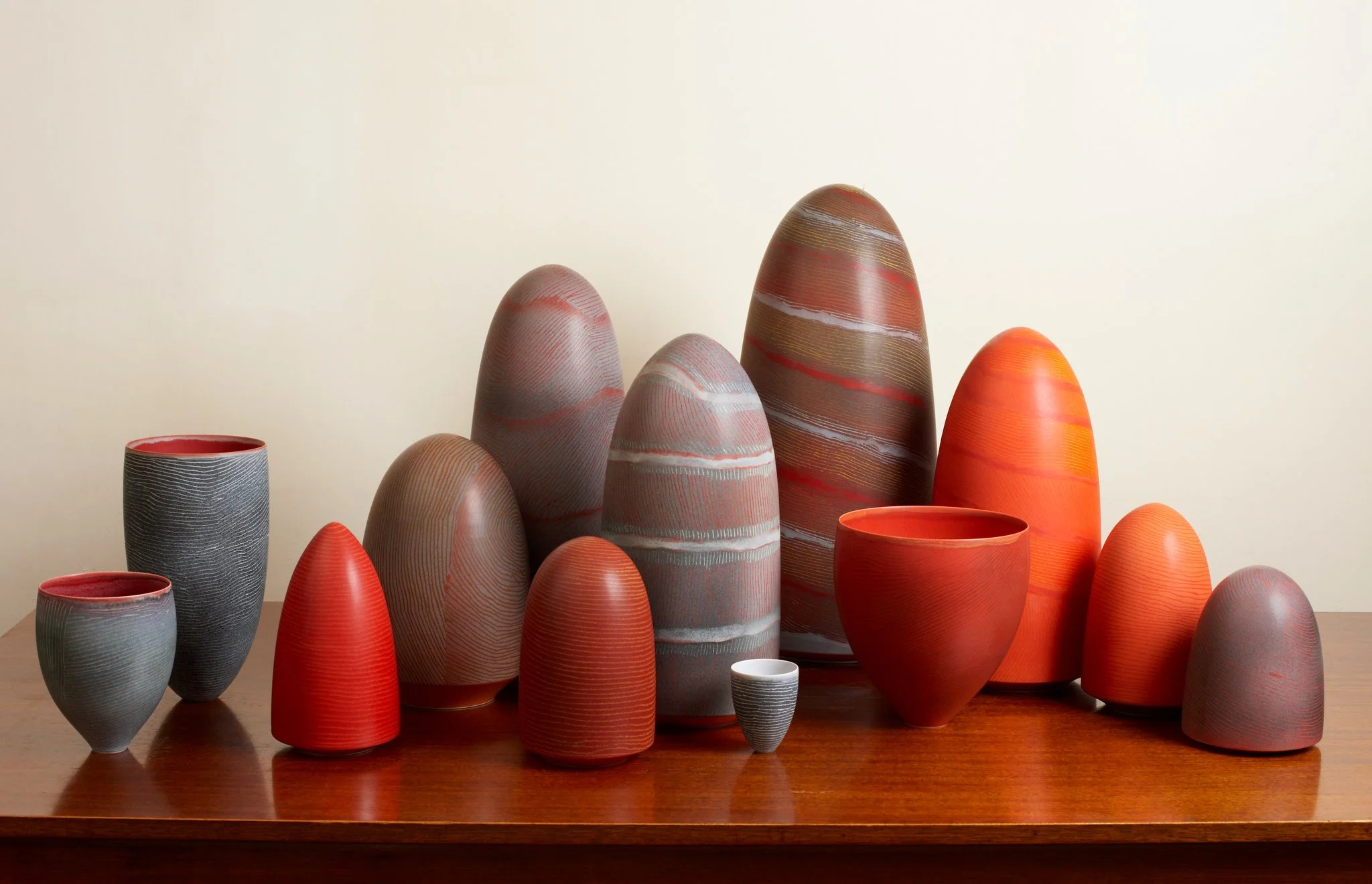
The process of distilling visual ideas to encapsulate the unique qualities of the topography, the flora, and the changing nature of the atmosphere from day to night and summer through to winter is a long and arduous process. It begins with the development of new forms. This is a collaborative process involving Warrick Palmateer, a skilled thrower who makes all her vessels. Under her direction, Palmateer creates the shapes and refines them when leather hard to ensure they have exactly the right lift from the ground. Each form is carefully considered in relation to others already made and groupings develop into rounded landscapes that stretch out on the shelves ready for the first bisque firing and glazing.
There are numerous triggers that initiate the development of new forms and new approaches to surface decoration. Most obviously it is through contact with a place and its people. Pip met the Indigenous artist Queenie McKenzie at the Warmun Community in the East Kimberley just a few months before her death. Drysdale sat with McKenzie while she completed one of her dry ochre paintings depicting the rocky protrusions, rolling hills and Boabs of her country. She later bought the painting of tall domed hills to hang in her kitchen. That work has been joined by others by Indigenous artists, including a magical painting by Kitty Kantilla, the revered artist from the Tiwi Islands. The influence of their work is evident in both the Tanami Series produced from 2001 and the current Kimberley Series. Her reference to the works of these artists is an act of homage just as artists from across cultures and over centuries have always done: a nod in the direction of their mentors and an acknowledgement of their achievements.
The artist absorbs all these influences and combines them with her memories and experiences of the landscape, such as her 1998 trip to Purnululu. Purnululu is the name given by the Kija people to the sandstone area of the Bungle Bungle Range. Rising as high as 578 metres above sea level, the extraordinary linear striping of the domes is due to the differences in clay content and porosity of the sandstone layers. The shapes prevalent throughout the Range are like inverted versions of the vessel forms she had been exploring for the past twenty years and are the main catalysts for her new work.
On the benches in her studio these ‘tablescapes’ grew as pots were drawn from the kiln, still warm and fresh with a new blush of colour. Moving from bench to bench the diversity and richness of her response amassed into a vast panorama of geological, botanical and meteorological complexity. Each grouping captured an aspect of the Kimberley landscape, some through nuances of colour and others through a linear extrapolation that flowed over their gently doming forms. They describe the topography of anthills, mountain ranges, tumbling tracts of spinifex and rocky protuberances that spring from the red desert soil. This is the Kimberley, or Pippin Drysdale’s Kimberley, in all its intricate convolutions of form, line, colour and texture, but there was one last facet of the project remaining.
Professor Ted Snell 2020